
Alumni Profile: Michelle Dietz (’10), Director of Government Relations, The Nature Conservancy
By Reese Lile, Sustainability Staff Writer
Michelle Dietz took part in the first class of interns with the Wake Forest Office of Sustainability as a senior when the internship program began in 2010. She worked as the “Campus Green Guide” intern, developing a resource booklet to help guide students towards sustainable choices. She earned her undergraduate degree in 2010 with a major in biology and double minor in chemistry and environmental science, then completed a Master’s in environmental sciences and policy at Johns Hopkins University in 2014. Currently, she works as the Director of Government Relations at The Nature Conservancy, a global environmental nonprofit with a primary office located in Washington, D.C.
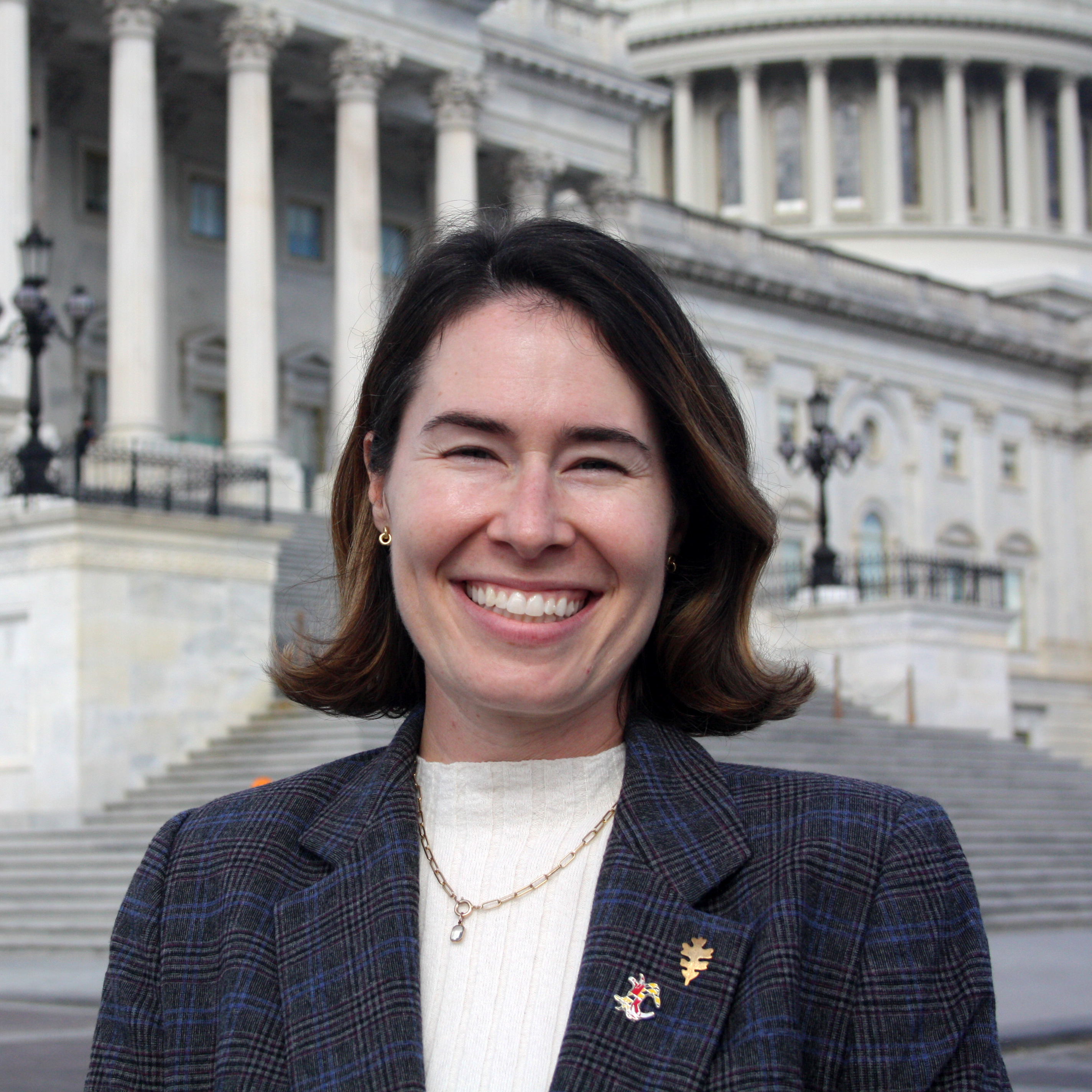
Michelle reflected on her time with the Office of Sustainability and how it has impacted her life and her career.
The “Top Ten” list prompt didn’t exist while you were applying to Wake Forest, but if you were to create a “Top ten list” for a Wake Forest application now, what would it be?
I think right now, and maybe this spans both my high school nerdiness and my current nerdiness, I would choose my top 10 trees. I was in an environmental science program in high school, and during my senior year, I had to collect leaves and bark samples for 50 trees, then make a book about them and memorize their Latin names. Now, I volunteer for an organization in DC that plants trees to grow the urban tree canopy in DC. I’m a team leader for that organization, and I volunteer with one of my best friends from Wake, who also lives in DC. It’s one of our extracurriculars and a way that we can give back to the community and do something fun together on Saturday mornings. So, I probably would pick my top ten trees – and, especially because I live in DC, I would have to include cherry trees on that list!.
What was your internship title with the Office of Sustainability, and what kind of work did you do in that role?
I worked as the Campus Green Guide Intern! Because that was the first year that the sustainability office was in place, there were different types of programs and internships than there are now. In that position, my job was to pull together a resource booklet for students to showcase the different types of sustainable options or opportunities available in the Winston-Salem community. For example, which restaurants were serving organic or local foods? Or what the different public transportation options around campus were, because there were not as many options then as there are now. It was a go-to booklet of all of the different types of things that would be helpful for a student who wanted to know about sustainable resources. I wrote and compiled information for it. And then I worked with a former student of Dedee’s who had a design company to create the booklet. At the end of my internship, I passed the content to this person, who then designed and finalized the green guide.
What kind of work are you involved in now?
I am the Director of Government Relations for the Maryland, DC chapter of The Nature Conservancy. The Nature Conservancy (TNC) is a global environmental nonprofit—the largest environmental nonprofit in the world at the moment. In the United States, we have a robust policy program, with a team that focuses on federal policy and works with Congress and government agencies, and then in each state, we have state chapters with policy staff focusing on state government. Working for the Maryland/DC chapter, I get to engage with policymakers in Maryland and in DC, including our governor’s office, the state legislature, state agencies, and my job is to think about how we incorporate environmental and conservation principles into our state policy. TNC is a science-based organization, meaning our work – including policy recommendations – is grounded in science. We perform a diverse array of functions as an organization, but in my role, my work is about creating partnerships, creating dialogue, and then figuring out good policy solutions at the state level to advance conservation and to tackle climate change. This is an exciting place to make change, especially when policy is difficult to move at the congressional level.
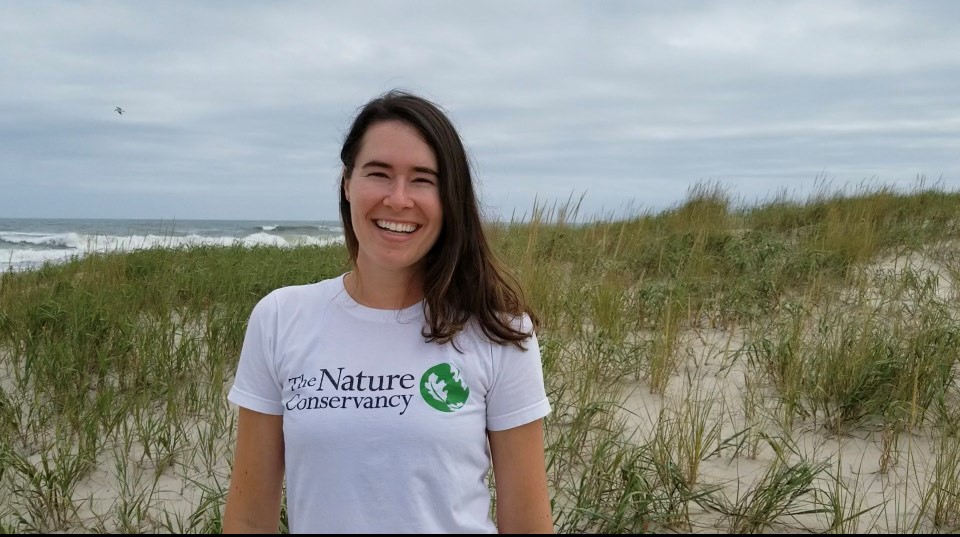
What are the ways that you incorporate sustainability and environmentalism into what you do?
One thing that I really love about my job is that I get to be a conduit for scientific information. I’m not the expert, but I’m able to talk to people who are working on science and conservation and make recommendations for how to make our communities more resilient to climate change or how to reduce carbon emissions. Then I get to turn that into policy lingo and inform what our state agencies are thinking about, how we can advance policies on these topics, and how we engage with elected officials. I get to be this intermediary and bring people together who are making decisions and can help to inform those decisions by using scientific and conservation principles. I think it’s helpful that I have a science background, so there is a little bit less of a learning curve. But I came into the policy space with no experience really; I didn’t take any undergrad classes in Poli Sci, didn’t really have any exposure to the policy world, so it was a lot of on-the-job learning. When I went to graduate school for environmental policy, I got up to speed on classic policies like NEPA and the Clean Water Act. I gained a deeper understanding of the different levels of government, how they impact us as citizens, and how we can engage in advocacy to shape how these systems work. This opened a whole new pathway for me and showed me how I could create a career there.
Are there any projects or work you have done that you are most proud of?
A lot of the work that I do is really collaborative, and in my mind, it’s the wins that we collectively make that I see as my successes. It’s not necessarily my win, it’s really broader conservation wins or the community wins. For instance, I worked on a team that was instrumental in wildfire disaster funding mechanisms at the federal level. This created separate funds for wildfires, instead of taking money out of forest management funds at the Department of the Interior. My team at TNC has been really instrumental in several different policies at the state level, including helping to draft language around building an office of resilience and a chief resilience officer in Maryland. Our team also worked on research that helped inform The Climate Solutions Now Act (2022), which set some pretty ambitious goals for Maryland on reducing emissions and working on clean energy standards for the state. I think I’m still working on what my big contribution is in this work, and that’s totally fine, in my opinion. I have a long way to go in my career, and in my mind, being successful on the job is having good partnerships, being collaborative, and building strong relationships, and those are all things that I’ve been able to accomplish so far.
How do you think your internship with the Office of Sustainability influenced your life and your career?
This internship was my first experience having a consistent project that I worked on in a professional setting. I think having that work experience was really valuable going into the career world, looking for internships out of college, and finding out the next steps in my career. Dedee is also such a wonderful person and a great mentor. I remember there were several times during my senior year when I went to her and just said, “I don’t know what I’m doing, and I don’t know what to do after college”. She gave me a lot of really sound advice about careers and what skills I wanted to spend time investing in. I feel like that was very instrumental to me in my career path, having a mentor who wasn’t in my degree program but had relevant work experience and life experience for the kind of career path that I was interested in pursuing. And while I didn’t realize that policy would be my pathway, having somebody in my corner who was rooting for me and giving me really sound advice was extremely helpful. And while sustainability itself isn’t necessarily in my day-to-day job, it’s all very relevant overall within the career pathway that I have. So I think having that experience was a nice pivot point into where I went with my career.
Do you have any advice for students who are looking to pursue a career in sustainability?
Networking and talking to people who have careers that you’re interested in has been the best piece of advice that I have received. It’s not always the most fun, but it is a really good way to understand what different career options look like, because it turns out that there are a lot of different types of sustainability-related careers out there! It’s always good to be open to hearing people’s advice on different careers, and taking the advice that sticks with you and leaving the rest. It’s also okay to not know what you’re doing next and to not always like all aspects of your job. But I think for every career opportunity that you have, you should consider what is one thing that you really enjoy doing, and equally importantly, what do you really not enjoy doing?
Any other advice for fellow Demon Deacons and future alumni as they embark on their career journeys?
We need anybody and everybody who has a passion for the environment, conservation, and sustainability to be working on these issues right now, because there are so many existential threats happening in the world. And, I think that it’s really important for us to recognize that the solutions to the problems that we face aren’t going to be solved by just members of Congress or people in policy. It’s going to take a collective of different types of skills and different interests to really find a solution for how we’re going to move forward and have a more sustainable future. And all of those pieces together will help us to find a way forward, so it is also important that you stay hopeful.
Read More Alumni Stories
- Takeaways from the 2026 Sustainability Alumni Career Panel
 The sixth annual Sustainability Alumni Career Panel returned as an in-person affair on March 25, 2026, allowing Wake Forest University alumni and students the opportunity […]
 - Alumni Profile: Kathleen Pritchard (’10) Shareholder, Welborn Sullivan Meck & Tooley law firm
 By Reese Lile, Sustainability Staff Writer Kathleen Pritchard was a member of the first class of Office of Sustainability interns when the program began in […]
 - Alumni Profile: Tracey Watson (’10) Senior Solicitor Assistant Attorney, City of Atlanta
 By Reese Lile, Sustainability Staff Writer Tracey Watson participated in the first class of sustainability interns as a communications intern when the Office of Sustainability […]