
By: Stan Meiburg, Executive Director Emeritus, Andrew Sabin Center for Environment and Sustainability and former Acting Deputy Administrator of the EPA
We think of spring as a time to be outside, to enjoy the warmth of the new season, the freshness of the air, the scent of flowers, the songs of birds returning. We take these things for granted—but there was a time when this was not so for many Americans—a time before the 1970 Clean Air Act.
Only about 18% of the current U.S. population were born before 1970. That means that there aren’t that many people like me who remember what air quality was like back then.
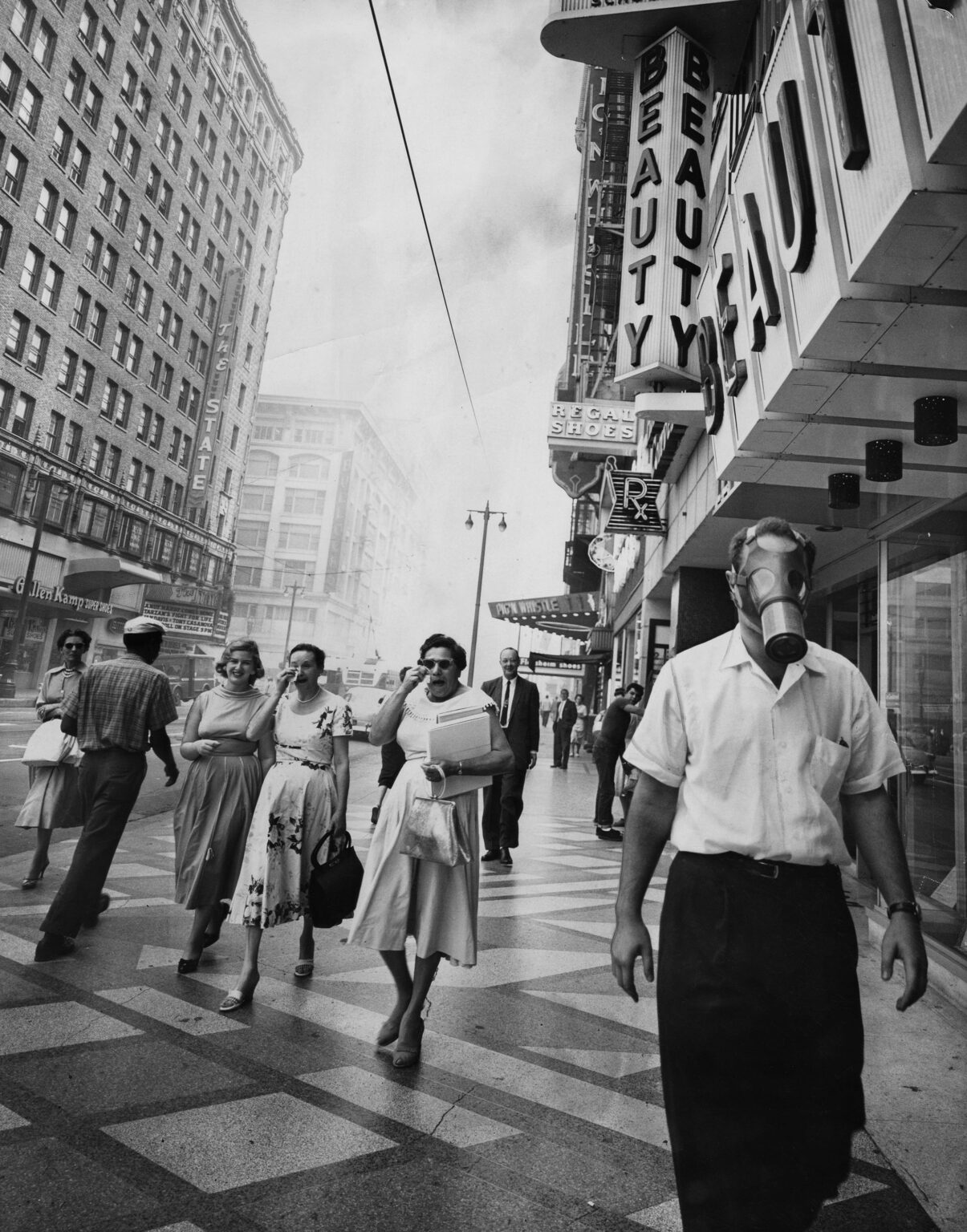
When we think of cities with dirty air, our minds run to places like Pakistan, India, and China. What Americans forget is that in 1970, this list would have included New York, Los Angeles, Houston, Pittsburgh, and regional cities like Birmingham and Chattanooga. My own experience was as a teenager in the Philadelphia area, where summertime smog from refineries and cars covered the surroundings like a dense fog. Today we see events like the January 2022 Weaver Fertilizer Fire as scary aberrations rather than a common state of affairs.
The 1970 Clean Air Act deserves much of the credit for our ability to take clean air (mostly!) for granted. The Act passed during a great wave of environmental awareness and related citizen activism and took advantage of a political window of opportunity as the legislative and executive branches competed to see who could gain more credit for responding to this demand for action. Other products of this dynamic were the passage of the National Environmental Policy Act and the creation of the U.S. Environmental Protection Agency, but even among these, the Clean Air Act stands out.
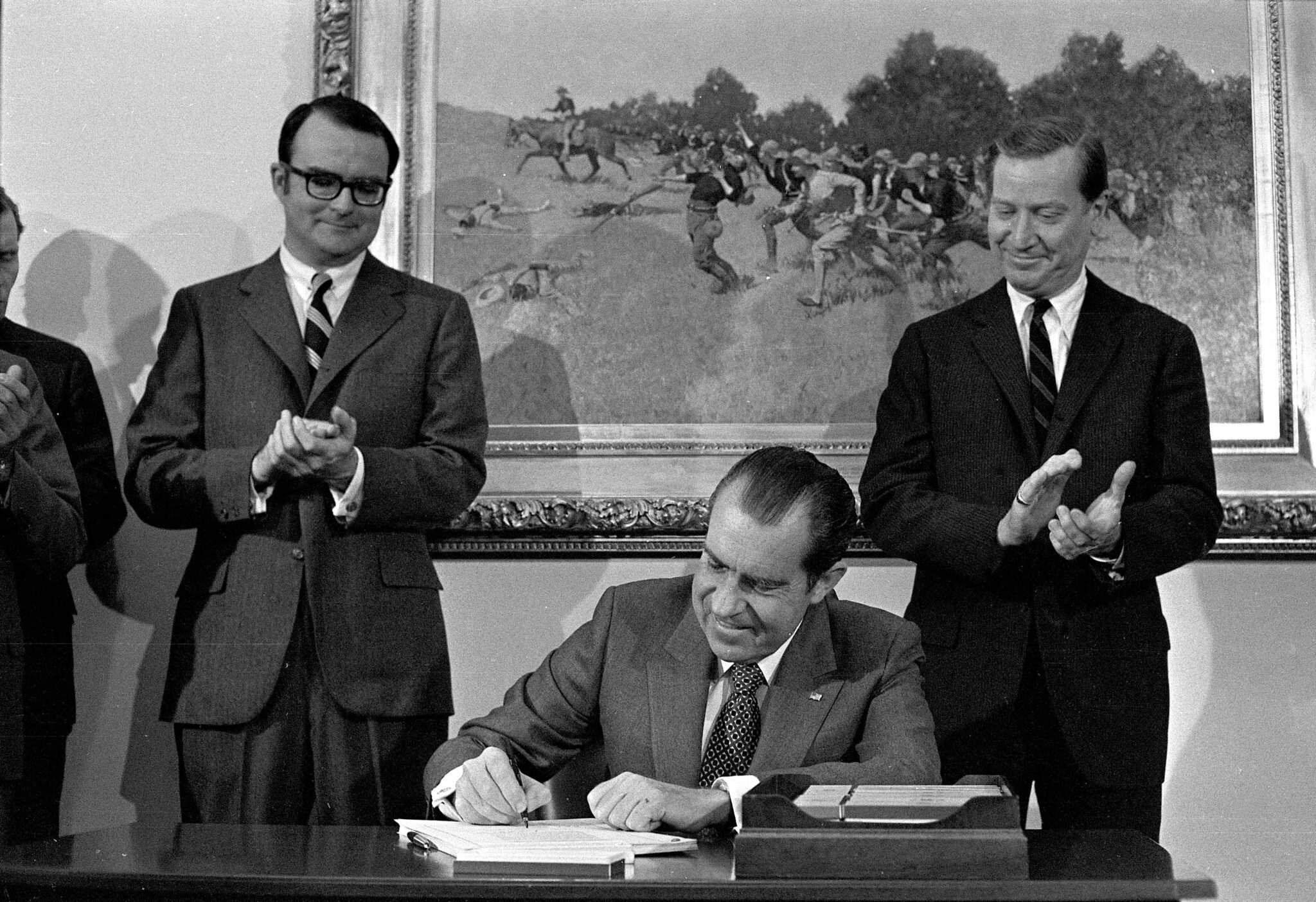
The Act pioneered many legislative innovations, among them nationwide standards, specific agency-forcing deadlines for action, technology-forcing pollution controls, mandatory state planning, greater federal enforcement power, and citizen suit provisions that gave environmental groups greater access to the courts. Replacing a weaker law passed three years earlier, it passed quickly and with remarkable bipartisan support: 401-25 in the House and 73-0 in the Senate.
Certainly, the implementation of the Act has been filled with challenges. For example, the Act set a deadline to reduce pollution from automobiles by 90% by the year 1975. Automobile manufacturers declared that such a thing would be impossible. One argument was that to achieve such a reduction would require having a computer in your car.
In a way, the critics were right. Catalytic converters were added to cars, beginning in 1975, but they could achieve 90% reductions for only two pollutants, carbon monoxide and hydrocarbons. A 90% reduction in a third pollutant, nitrogen oxides, was not achieved until 1994. These controls did require computers in your car! Of course, these computers were not the room-sized monsters so gloomily predicted in 1970, but devices and sensors so small as to be unnoticeable to drivers.
This is only one example of the role of technological innovation in achieving the goals of the Clean Air Act. Pollution control devices, such as sulfur dioxide scrubbers, thermal and catalytic oxidizers, and selective catalytic reduction for nitrogen oxides, now exist and are routine technology for reducing air pollution. Businesses, university researchers, scientists and engineers, and innovative entrepreneurs formed partnerships with the public sector to advance the national goal of clean air. Most companies complied with the law, and strong enforcement sent signals that those who did not would face a reckoning.
The results speak for themselves. National averages of common air pollutants have dropped by an average of 78% since 1970, while the economy has more than quadrupled, vehicle miles traveled have almost tripled, the U.S. population has increased by 63%, and energy consumption has gone up by 42%.
The old story was that belching smokestacks signified prosperity. The real story is that environmental protection benefits both human health and the economy.
To be sure, many challenges remain. National averages can gloss over the fact that all communities have not benefitted equally from the pollution reductions the Act produced. Court decisions have both promoted and delayed progress. In the face of new challenges, the Act has not been comprehensively reviewed by Congress since 1990.
And of course there is climate. The current administration is doing everything in its power to deny the applicability of the Clean Air Act to greenhouse gases, notwithstanding a ruling by the Supreme Court in 2007 that it can. Without action by Congress, this effort (which also threatens to increase conventional air pollution) is headed back to the Supreme Court.
But the story of the impact of the Clean Air Act should give us hope. In 1970 the challenges of air pollution seemed as insurmountable as the challenges of climate change seem today. The parallels are not perfect, of course, but fortunately in 1970 the country did not succumb to either despair or false narratives that we could not have both economic growth and clean air. Law, science, and technology made possible what seemed impossible.
Think of this when you go outside to enjoy the returning spring. There is no reason, outside of a lack of human wisdom and leadership, that this cannot happen again.
#SpringIntheForest #ItTakesaForest #TakeActionforEarth