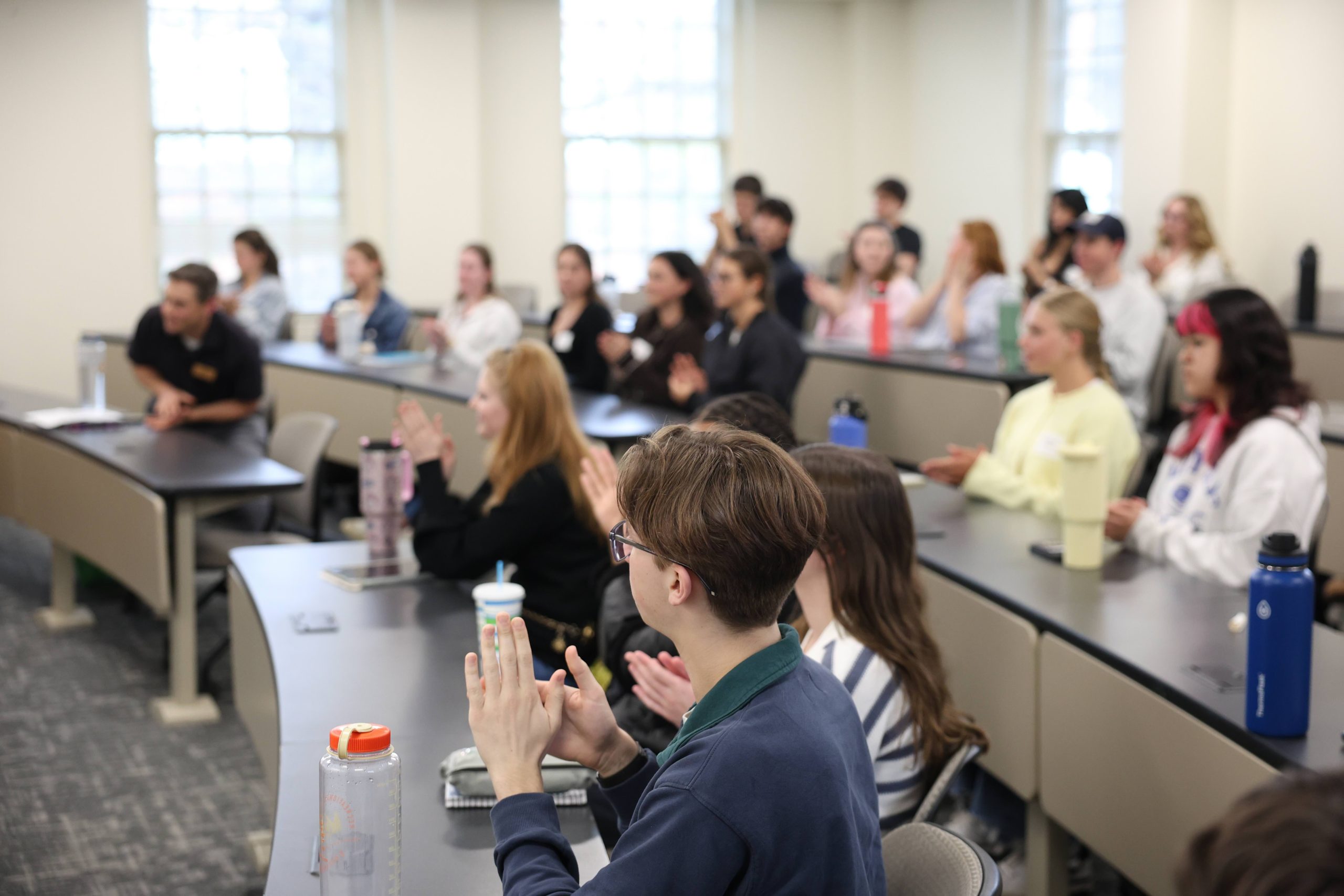
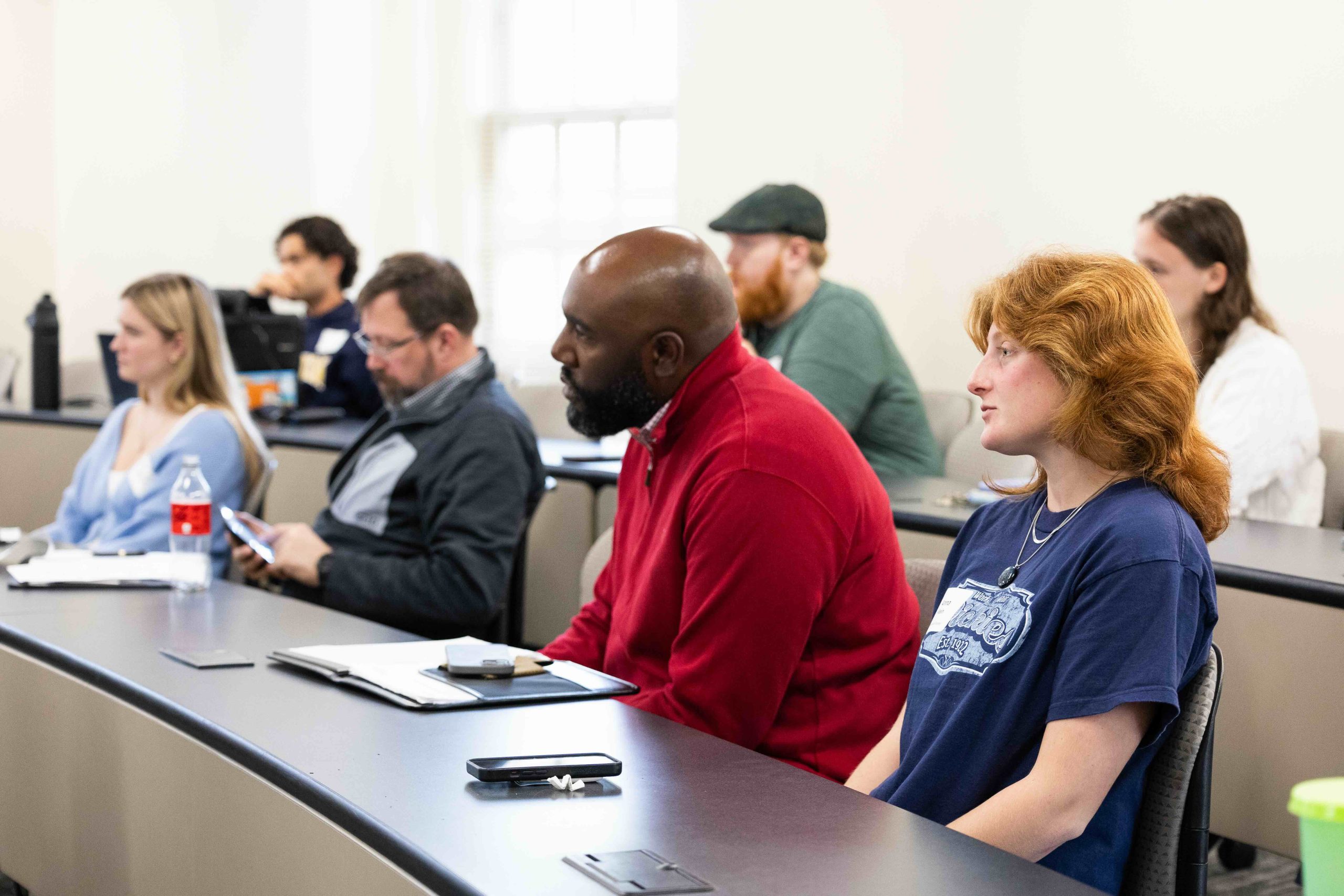
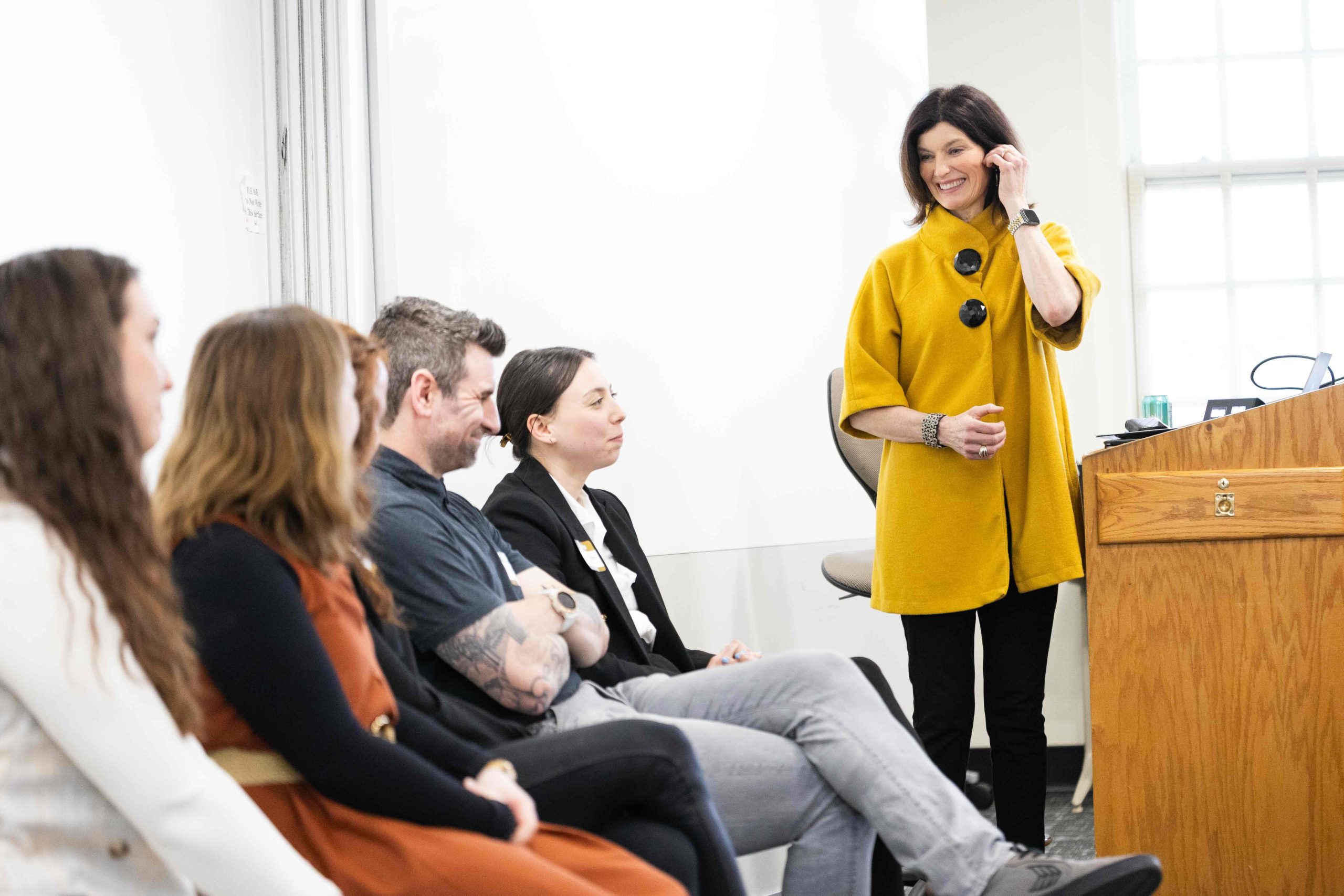
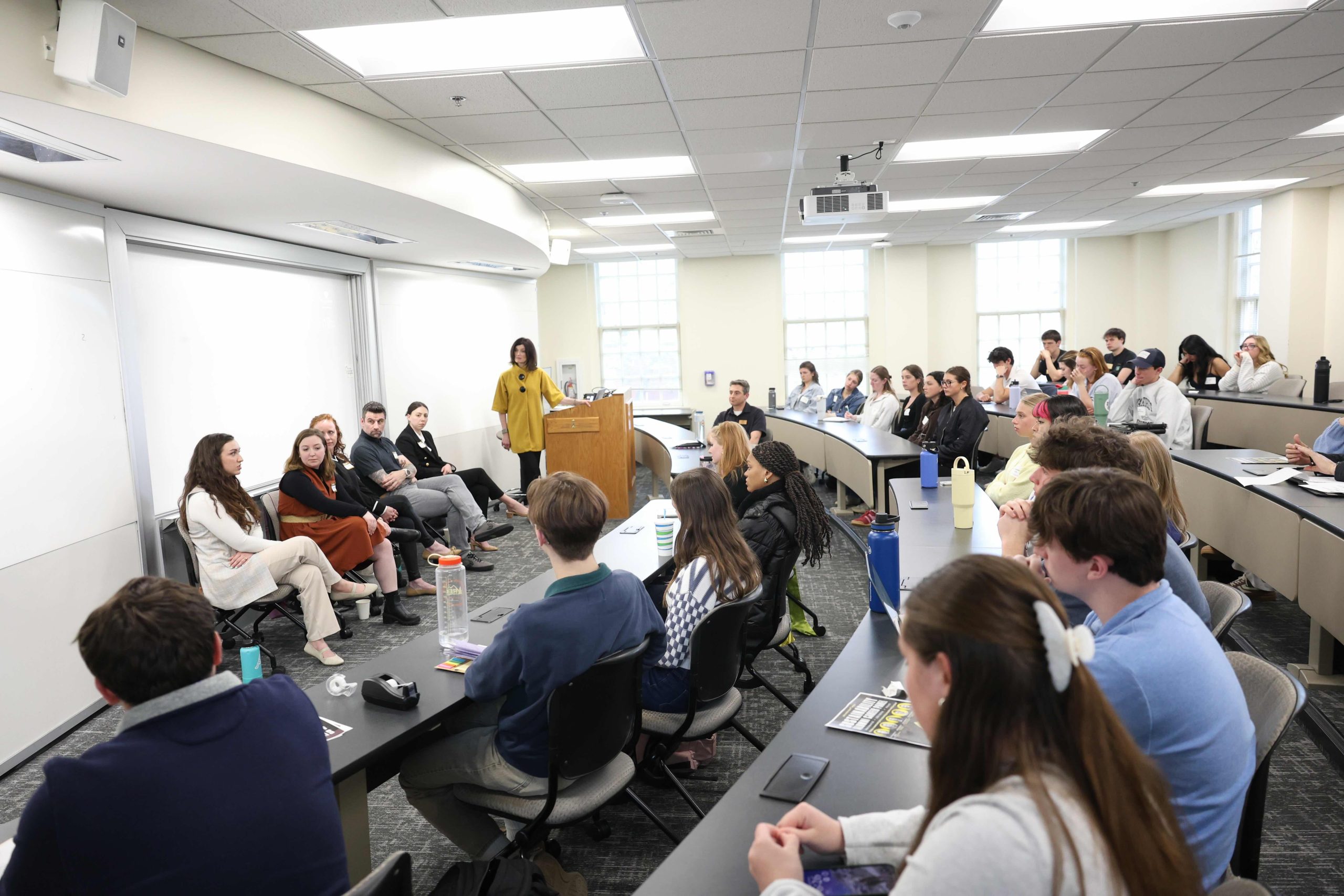
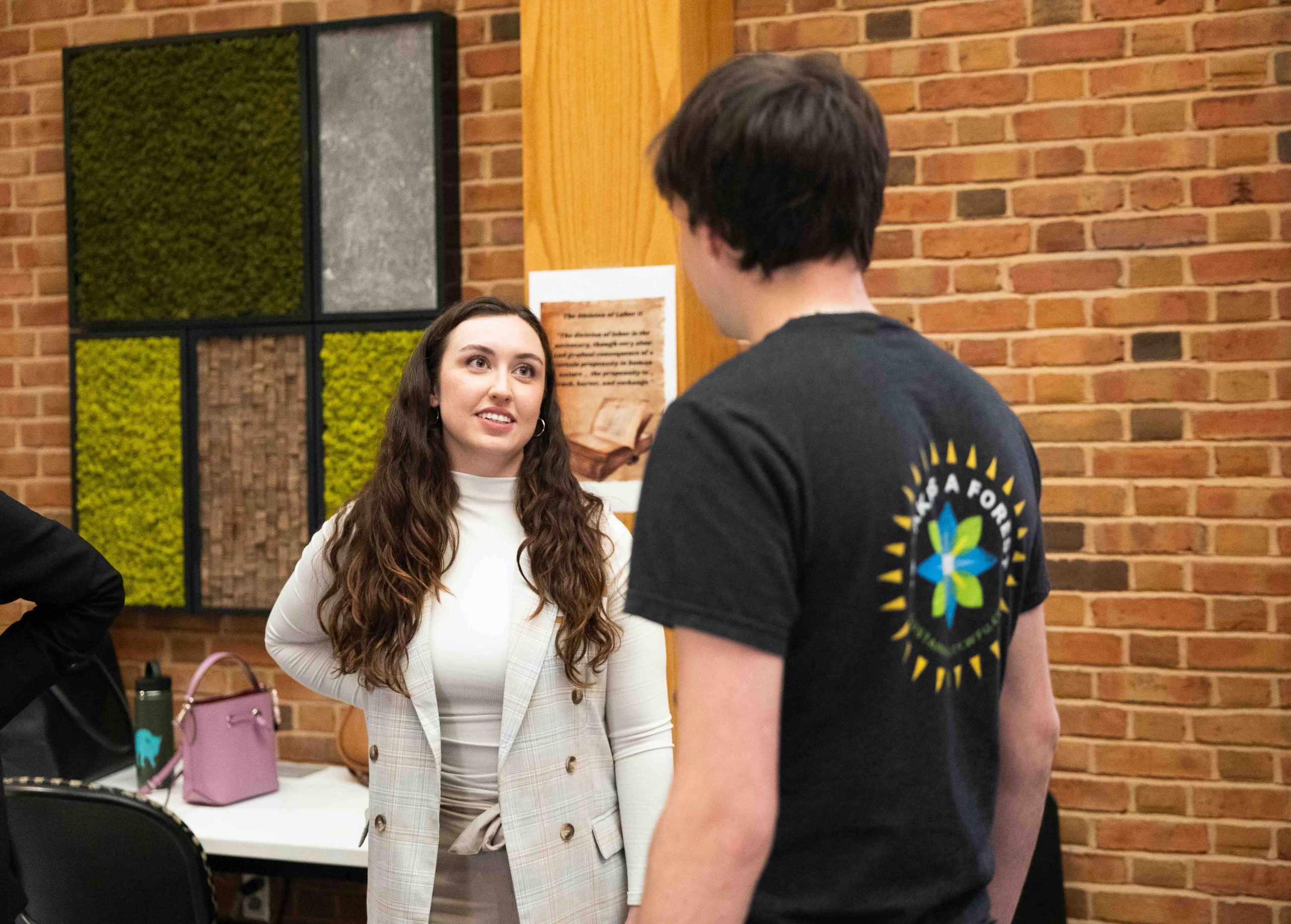
The sixth annual Sustainability Alumni Career Panel returned as an in-person affair on March 25, 2026, allowing Wake Forest University alumni and students the opportunity to share their stories and connect without the barrier of a screen. The event began with a panel discussion and was followed by a light reception for students to dive deeper into their questions with individual panelists.
Heidi Robinson of the OPCD moderated the panel featuring five Wake Forest alumni, including:
- Melissa Henkle ‘10, MBA‘16: Director of Brand Sales & Marketing @ Unifi, Inc.
- Juliana Hopper ‘22: Project Engineer II @ Timmons Group
- Emma Hughes ‘19: Government Relations & Policy Manager @ The Nature Conservancy – NC
- Tony Piacenza MA‘22: Manager, ESG Data & Reporting @ Ahold Delhaize USA
- Suzanne Sabin ’18: Policy & Communications Manager @ Carolinas Clean Energy Business Association
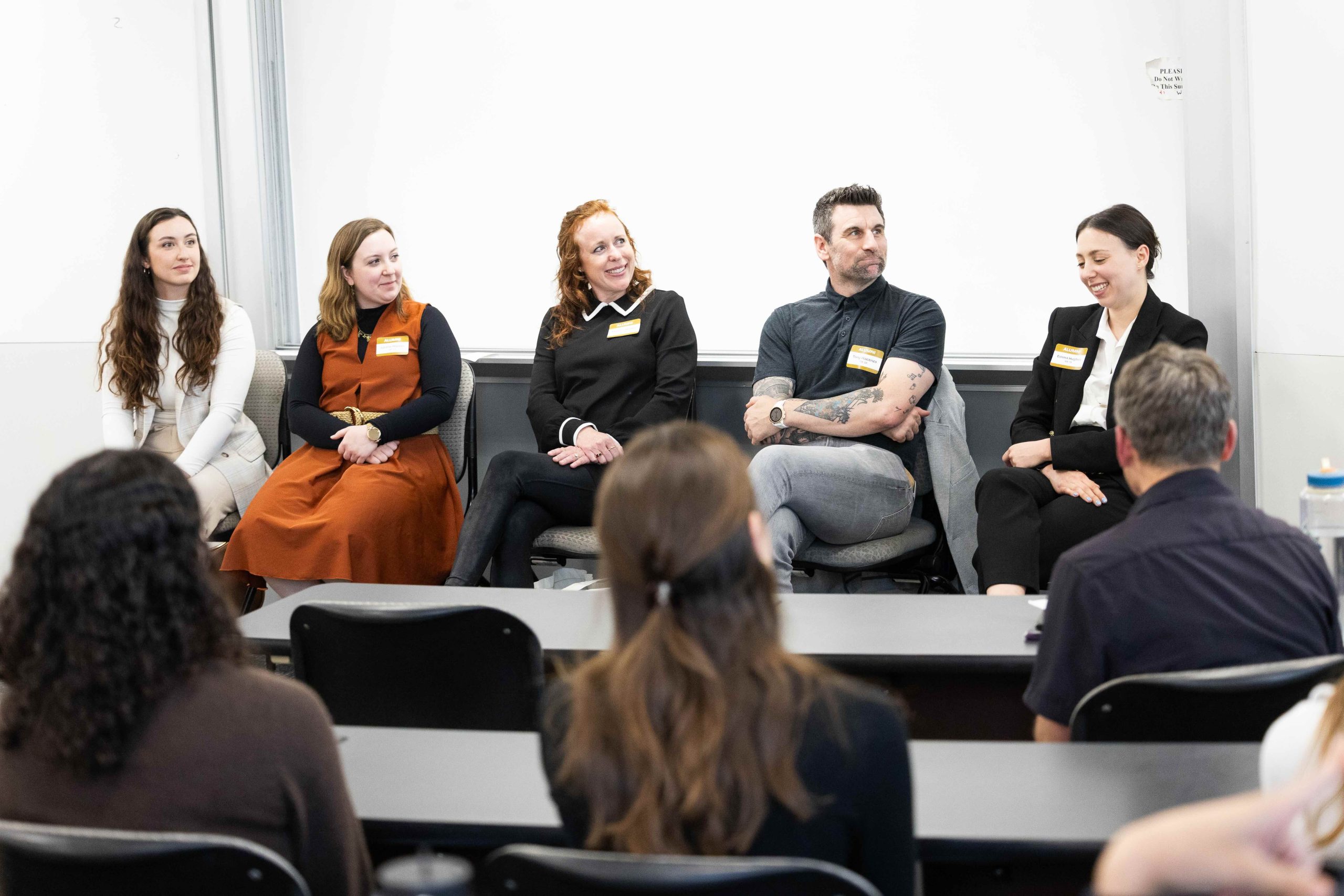
Panelists reflected on their time as students and their journeys through graduate school, different professions, and various states and countries. Each panelist’s story was unique, but they all found themselves back in North Carolina for roles that integrate sustainability into their fields. For some, their path was clear early.
“It all came together senior year for my capstone, where my project was wastewater-focused,” said Juliana Hopper. “It was through that project [that I found my engineering] niche. I really loved that project and that the results we found would be super impactful on the community.”
That capstone project sparked a passion that Hopper (‘22) would continue to nurture through grad school and embody in her career. Throughout the event, panelists emphasized how a student’s time on campus can be imperative to developing their professional identity. Classwork, club activities, and internships, among other involvements, they shared, help uncover the passion, talent, and opportunity that a career is built on.
“I tried to build a well-rounded portfolio for myself in the liberal arts because [sustainability] is very interdisciplinary,” said Suzanne Sabin when reflecting on her journey at Wake Forest.
After graduating in 2018 with an English degree and Environmental Studies minor, Sabin (‘18) went to graduate school to delve further into policy and position herself for a career that would be resilient to an unpredictable future. Sabin, along with her fellow panelists, acknowledged how quickly they’ve seen work in sustainability evolve, and that the coming years can be challenging to predict.
The importance of soft skills emerged as a theme, with panelists naming patience, creativity, adaptability, communication, and relationship building as vital for early-career and seasoned professionals alike. These skills were particularly important for panelists who found themselves in careers that didn’t explicitly incorporate sustainability as a lens.
“It was part of me, it wasn’t part of my profession,” explained Tony Piacenza. “It just took a while to figure out how to make it part of my profession. Continuing to learn was really what got me there.”
Piacenza (MA ‘22) worked as a teacher for many years before starting a new chapter in consulting. He credited his Wake Forest professor for helping him find this calling.
“You spend a lot of time on this campus. You spend a lot of time in these classrooms, and it’s not just for a grade,” he said. “It’s to build relationships with the people in the classroom with you, and with the people in the front of the classroom.”
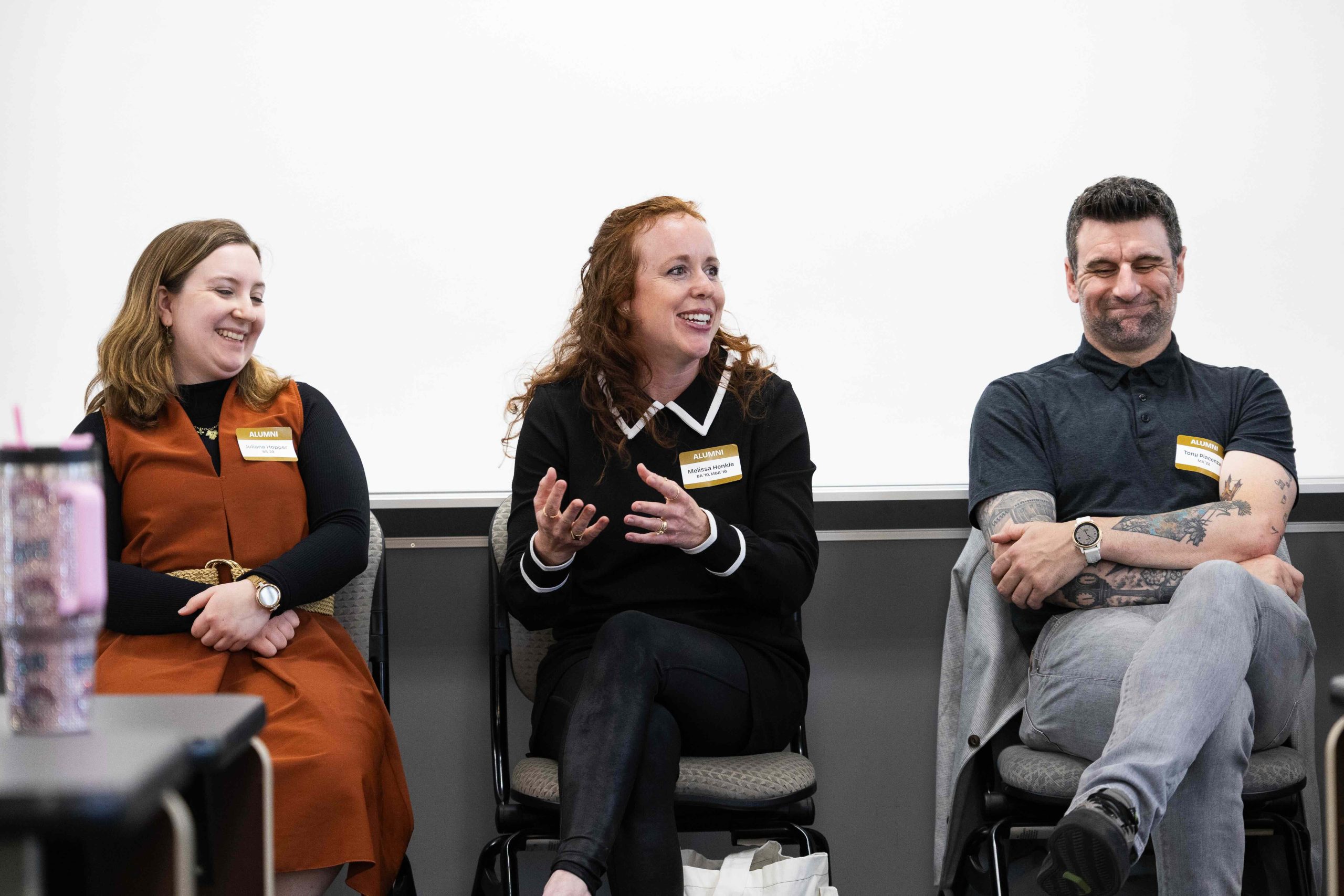
He emphasized that networking is a built skill, one that costs little when you fail but pays dividends to invest in early. The Wake Forest network was credited as a compass for those unmoored in their careers, or for a hand when they were looking for the next step forward.
Through resources like the WFU Sustainability Career Network and its accompanying LinkedIn group, or support from experts on campus like the OPCD, students and alumni alike can continue developing their network, skills, and careers.
One message rang clear by the end of the event. Students have the strength and support to start, but need to find the courage to risk failing.
“I was so worried [about] how to take the straightest path and be perfect,” Sabin reflected on her time as a student. She gave students one last piece of advice.
“Explore. Try new things and find through trial and error what is important to you and what your values are.”
A meaningful career will take shape next.