
By Reese Lile (‘28)
Every year, incoming first-year students have the opportunity to apply to be a part of Wake Forest’s Sustainability Leadership Group (SLG). As members of this tight-knit cohort, students bring awareness to environmental issues that require action, offering up educational opportunities and creative solutions.
This year, two members of SLG’29 blended plastic waste mitigation and artistic ingenuity—creating an art installation to celebrate Earth Month 2026. The installation, “Where Waste Meets Creativity: From Campus Habits to Global Impacts,” takes the form of an intricate sea turtle named Earlene, who is made entirely of repurposed waste materials like cardboard, paper, and single-use plastics.
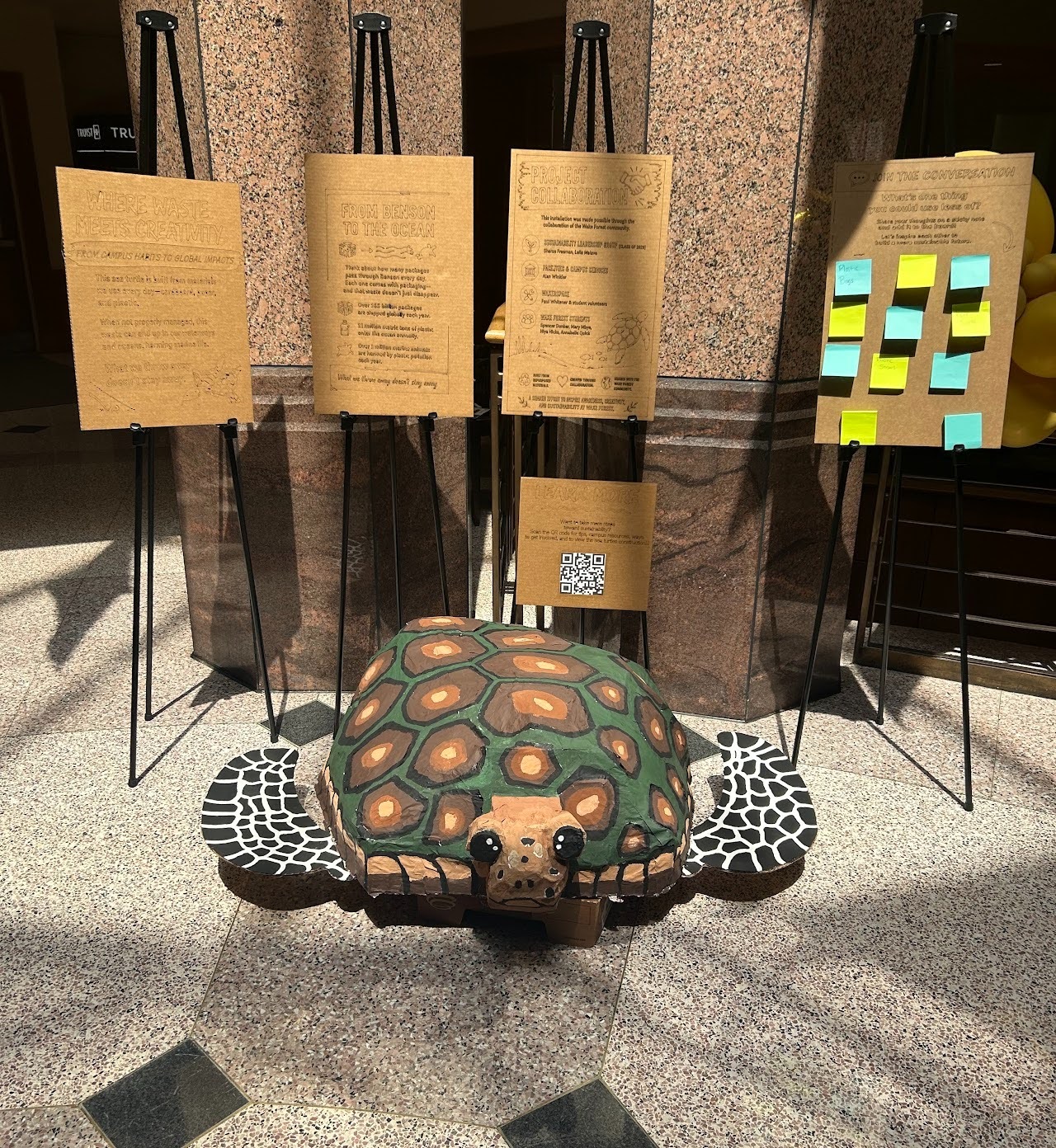
Sharae Freeman (‘29) and Leila Malave (‘29) collected waste products from around campus and methodically constructed Earlene in the student workshop, WakerSpace. Earlene is a product of piles of trash, papier-mache, paints, and glues. On their website, Freeman and Malave share their intention with this art.
“By building a sea turtle out of campus waste, we wanted to make that connection direct and undeniable: The cardboard box from your latest delivery. The plastic bottle you finished at lunch. The newspaper you recycled. These materials don’t disappear. They can end up in waterways, in oceans, inside animals like this one.”
On display on the third floor of Benson University Center, Earlene invites students to consider the broader impacts of their daily consumption habits, especially when it comes to online shopping; the turtle is composed heavily of shipping materials collected from the bustling mailroom located in the basement of Benson.
“This project is meaningful to me because it brings creativity into sustainability in a way that isn’t super common on campus. Most of the time, sustainability shows up through data, tabling, or conversations, but this adds a more visual and interactive angle. It turns something people might usually walk past into something they actually stop and engage with,” Malave said. “I also like that it shifts the conversation a little. It focuses on rethinking waste and how we define it. Using discarded materials as a medium shows that waste isn’t always the end of something. It can be reworked into something new, which adds a different dimension to how we think about sustainability.”
Their website suggests that students think twice before clicking ship on that next order and ask questions of oneself like, does this need packaging at all?
A product of student waste, Earlene acts as a reminder of the marine life that suffers as a result of plastics that end up in our oceans. The project also reminds passersby that recycling is not a perfect solution, and acts as a tangible reminder that reducing consumption habits in the first place is what makes a big difference.
“This project isn’t going to solve the plastic crisis. But walking past a 3 foot turtle made of cardboard and plastics – that sticks with you. For me, the point isn’t guilt. It’s attention,” said Freeman. “Most of us don’t think about waste once it’s in the bin. That’s the whole design of our system, out of sight, out of mind. This project just pulls it back into sight for a second. That’s enough. That’s where change starts.”
Freeman and Malave’s project is a powerful visual example of how we can creatively reframe environmental problems and make an impact. You can visit Earlene and engage with the project on the third floor of Benson University Center until April 28.