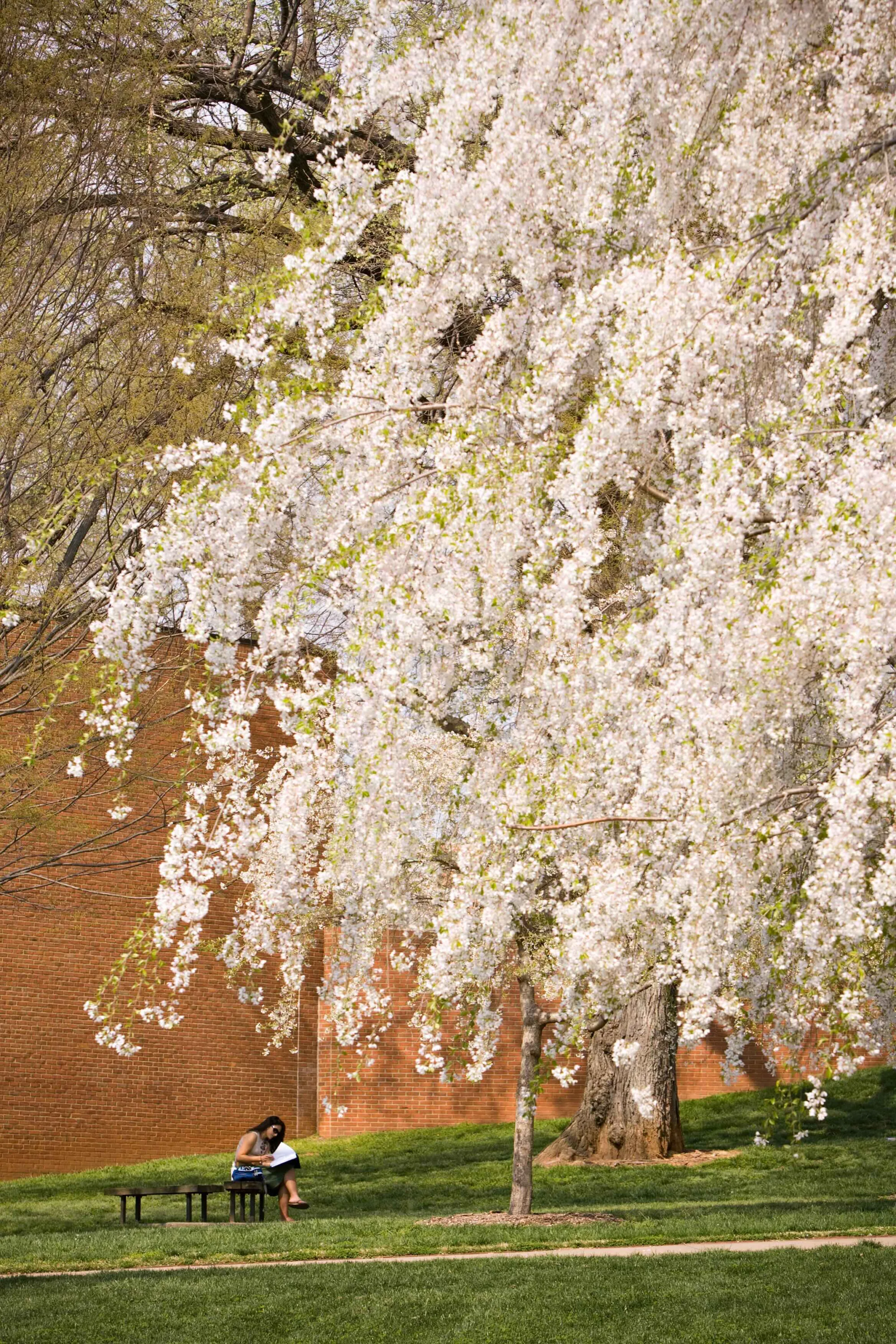
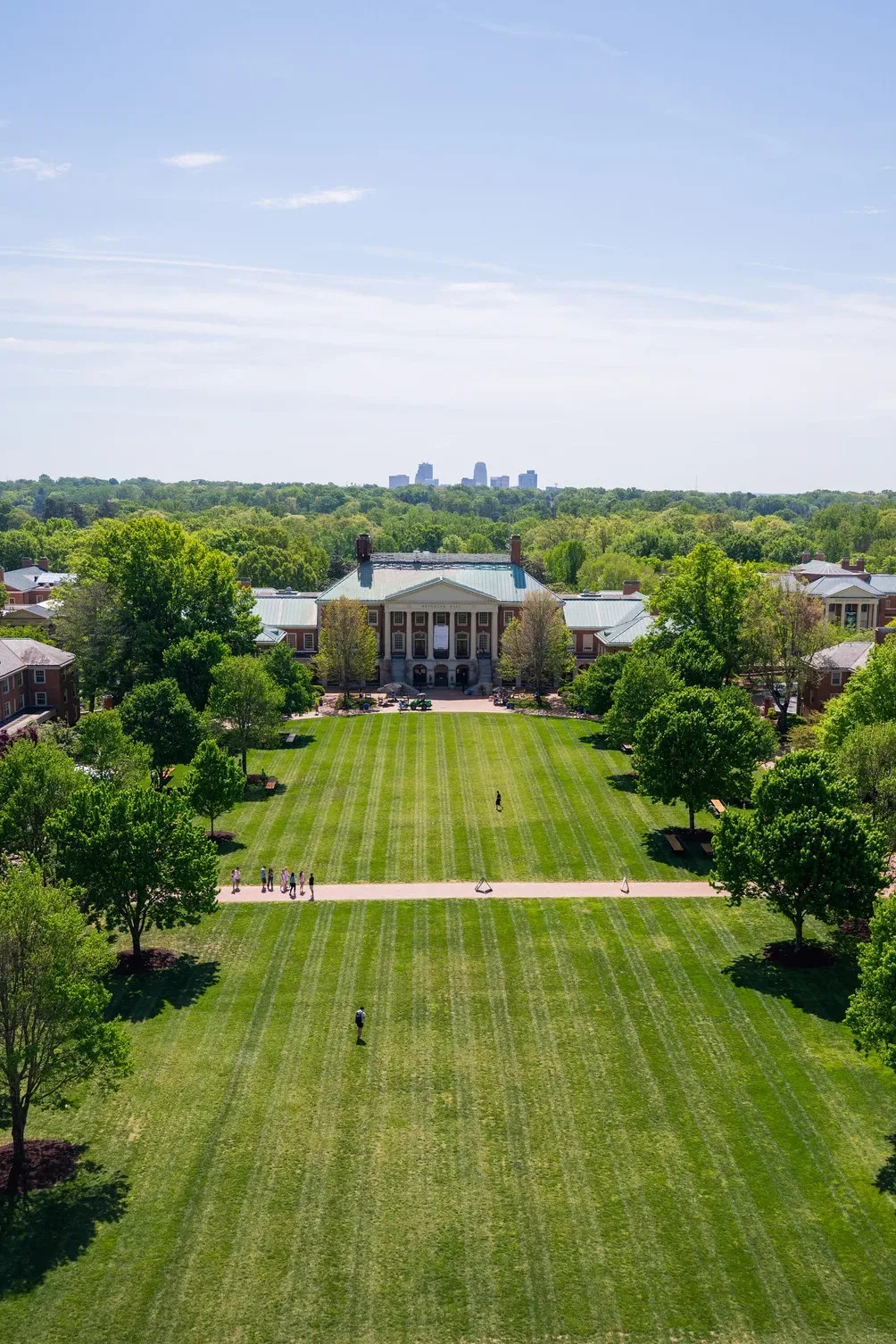
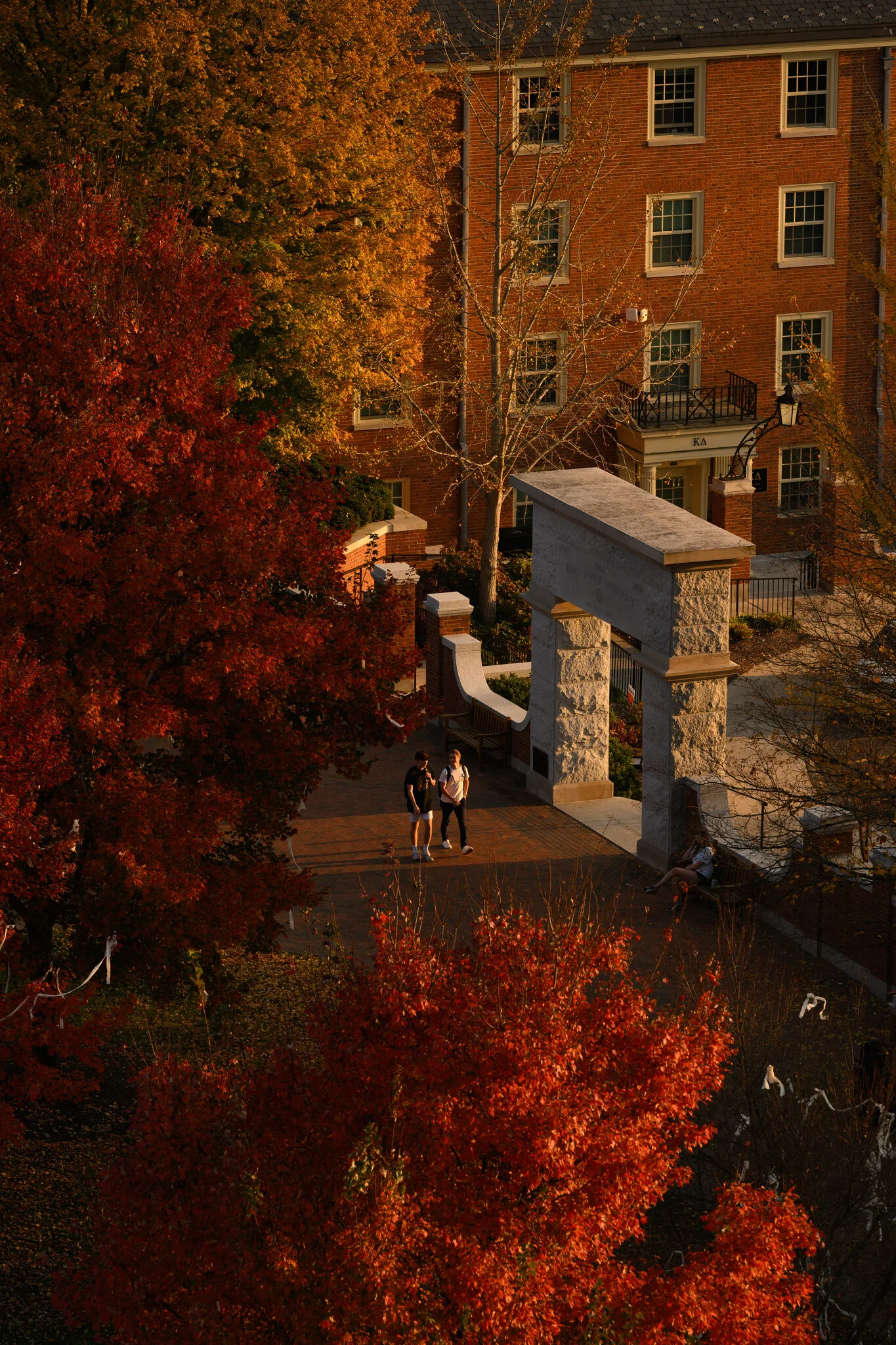
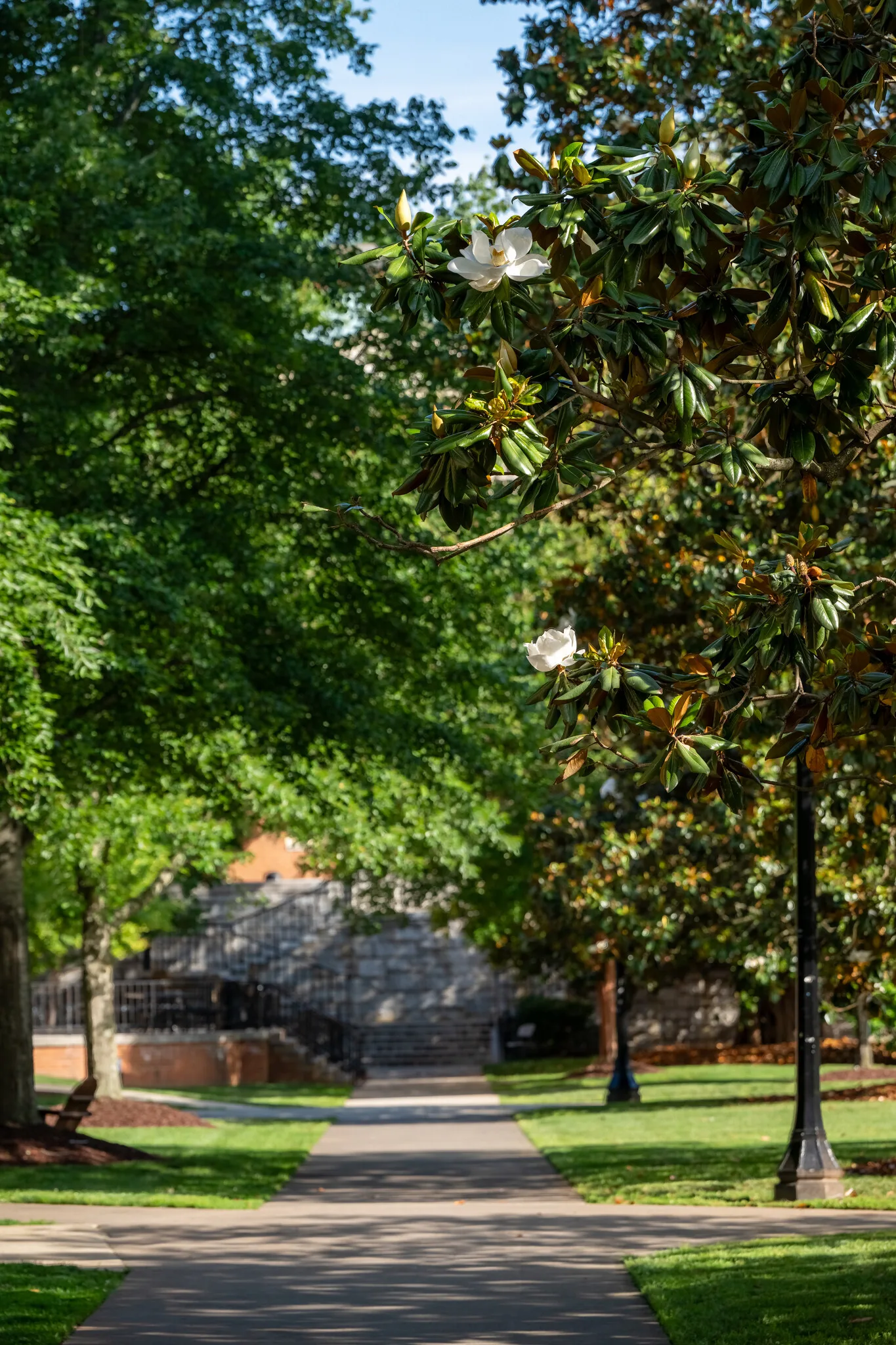
In July 2026, Wake Forest University achieved Level II Arboretum Accreditation through ArbNet, the world’s leading accreditation body for arboreta. This achievement builds upon the university’s 15-year recognition as a Tree Campus Higher Education, showcasing Wake Forest’s commitment to our campus’ urban and suburban treescapes.
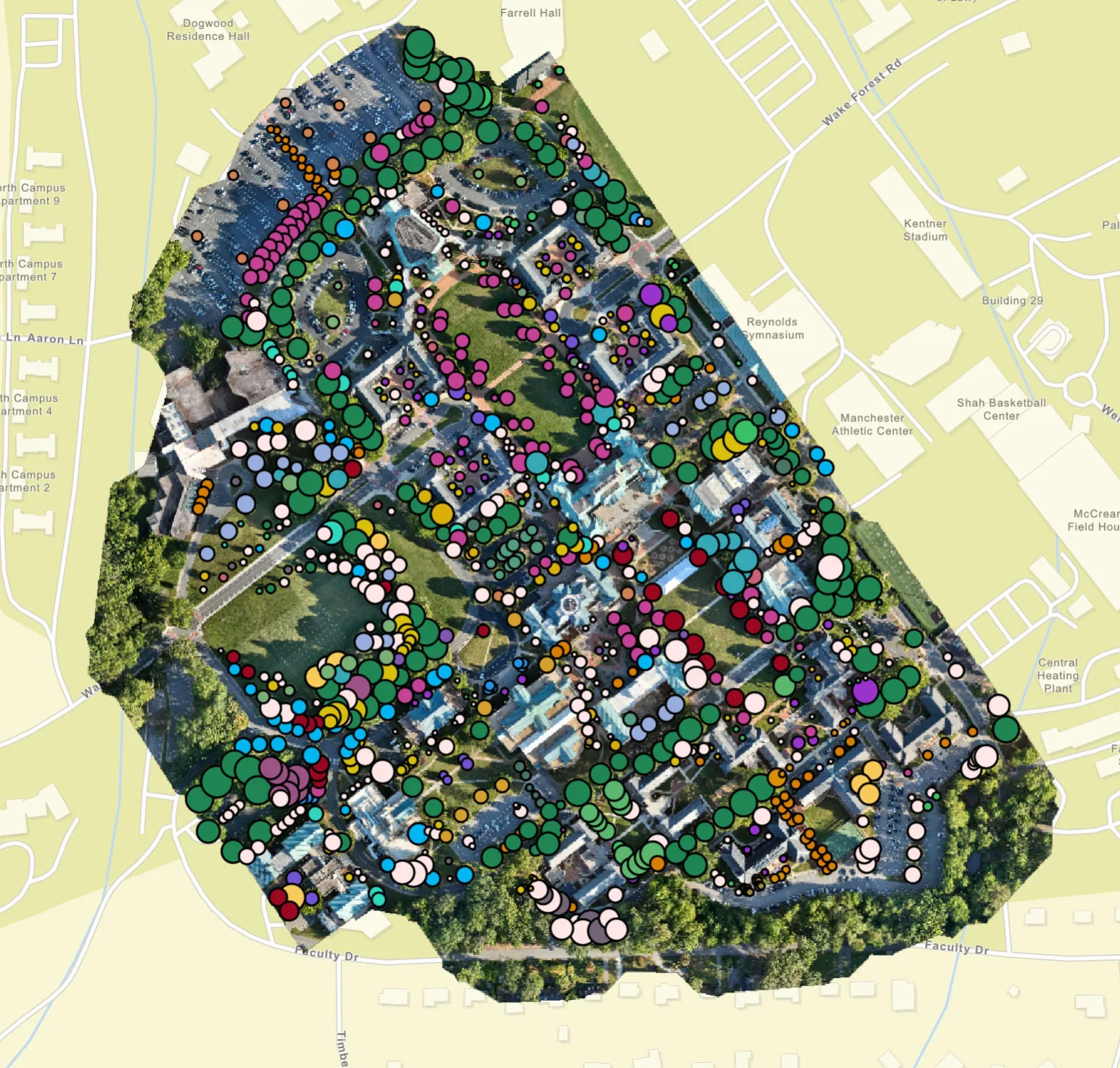
Inspired by a partial tree inventory started in 2008, assistant director of sustainability strategy Erin Hamilton, university arborist Jim Mussetter, and assistant professor of environment and sustainability studies Ovidiu Csillik collaborated to reinvigorate the effort through a cross-functional campus partnership. Combining student learning, 300 million laser points of drone LiDAR data, and institutional knowledge, the team mapped over 1,000 trees—representing more than 135 unique species—across a 90-acre section of the Reynolda campus.
Planting the seeds for collaboration
One of the goals outlined in Wake Forest’s Campus Tree Care Plan was to create this interactive, digital tree map through faculty and student collaboration. In an exploratory conversation about campus-based learning opportunities in early 2025, Csillik brought his expertise and the desire to incorporate a remote sensing project into his students’ research and coursework.
“It became clear in early conversations that this project could fly one kite with many strings, including leading to the well-deserved arboretum status for Wake Forest,” Hamilton said. “I see a large part of my role as finding the point of opportunity in the Venn diagram where these types of operational needs, research and teaching aims, and institutional goals overlap.”
Behind the making of the map
Students assisted in scanning and identifying trees in classes and a research lab led by Csillik, and Mussetter used his three decades of institutional knowledge to fact-check each individual tree as it was placed on the ArcGIS map.
“In our office, we say ‘It Takes a Forest’ because we know that nothing happens in a silo,” Hamilton said. “This project would not have been possible without Jim’s institutional knowledge or Ovidiu’s research expertise. Their combined commitment to collaboration through campus engaged learning is what brought this project to fruition for the benefit of the entire Wake Forest community, and I am so grateful to have been a part of it.”
This recognition is a testament to Wake Forest’s culture of collaboration, as well as the dedication of faculty, staff, and students who challenge and elevate us to new heights.
Explore our tree map and keep reading to learn more about the project.
Learn about the project
Footage for this video was provided by multimedia intern Nate Nail (’28)