
By sustainability staff writer Jasmine Standez (’27)
For the Office of Sustainability, the student lifecycle begins well before the new class of first-years arrives on campus.
Through Campus Days, communications, and encouragement to move in the “Deac” way come August, incoming students are invited into Wake Forest’s culture of resilience and adaptation.
“I want students to feel a sense of pride in Wake Forest and in being part of this community,” said Brian Cohen, Assistant Director for Sustainability Engagement. “It’s not about necessarily even taking on or trying something new – though we welcome that – it’s more about showing that what we offer and what we do fits into what students already care about.”
That connection can start from any entry point, including waste reduction and recycling. As first-years arrived this August, Office of Sustainability interns introduced students and parents to campus recycling practices to encourage proper waste diversion through the year.
Taking a Stroll Through the Forest
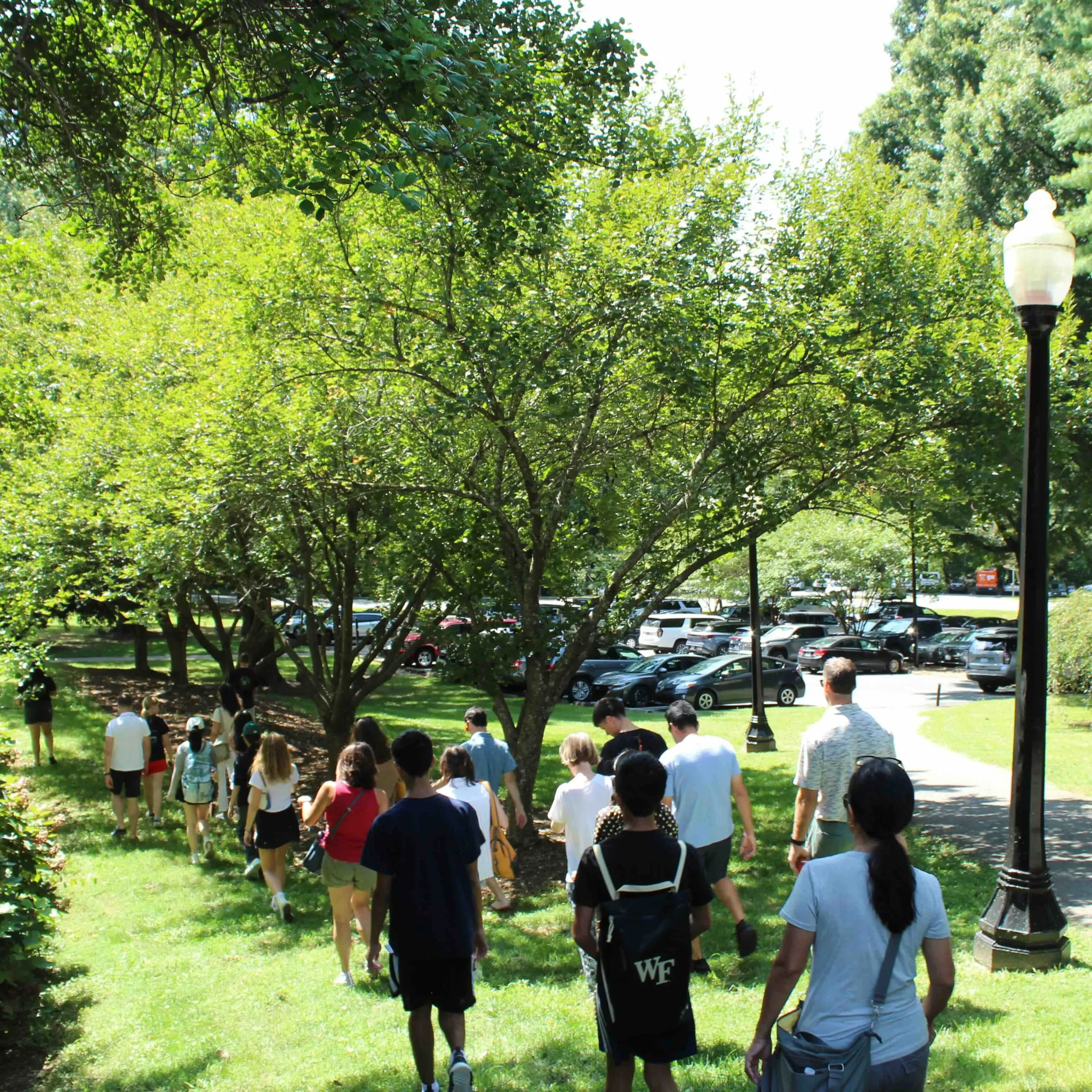
The connections made continued through orientation. For the first time, all 1,600 first-year students were introduced to south campus through the Office of Sustainability’s signature Stroll Through the Forest during orientation.
Guided by 150 student leaders serving as “Forest Guides,” the stroll showcased outdoor campus landmarks including the Tohi Garden, Manchester Plaza’s heritage Southern Magnolia trees, the Winston Hall rain garden, and the Reynolda Trails. Forest Guides shared the history and ecosystem services of these spaces while discussing the mental health and well-being benefits of spending time in nature.
Nurture Your Plan(e)t, Nurture Yourself
The evening before the first day of classes, over 40 students walked to the Campus Garden for Dig In, an annual welcome gathering with food, music, and opportunities to enjoy the beauty of the garden in late August.
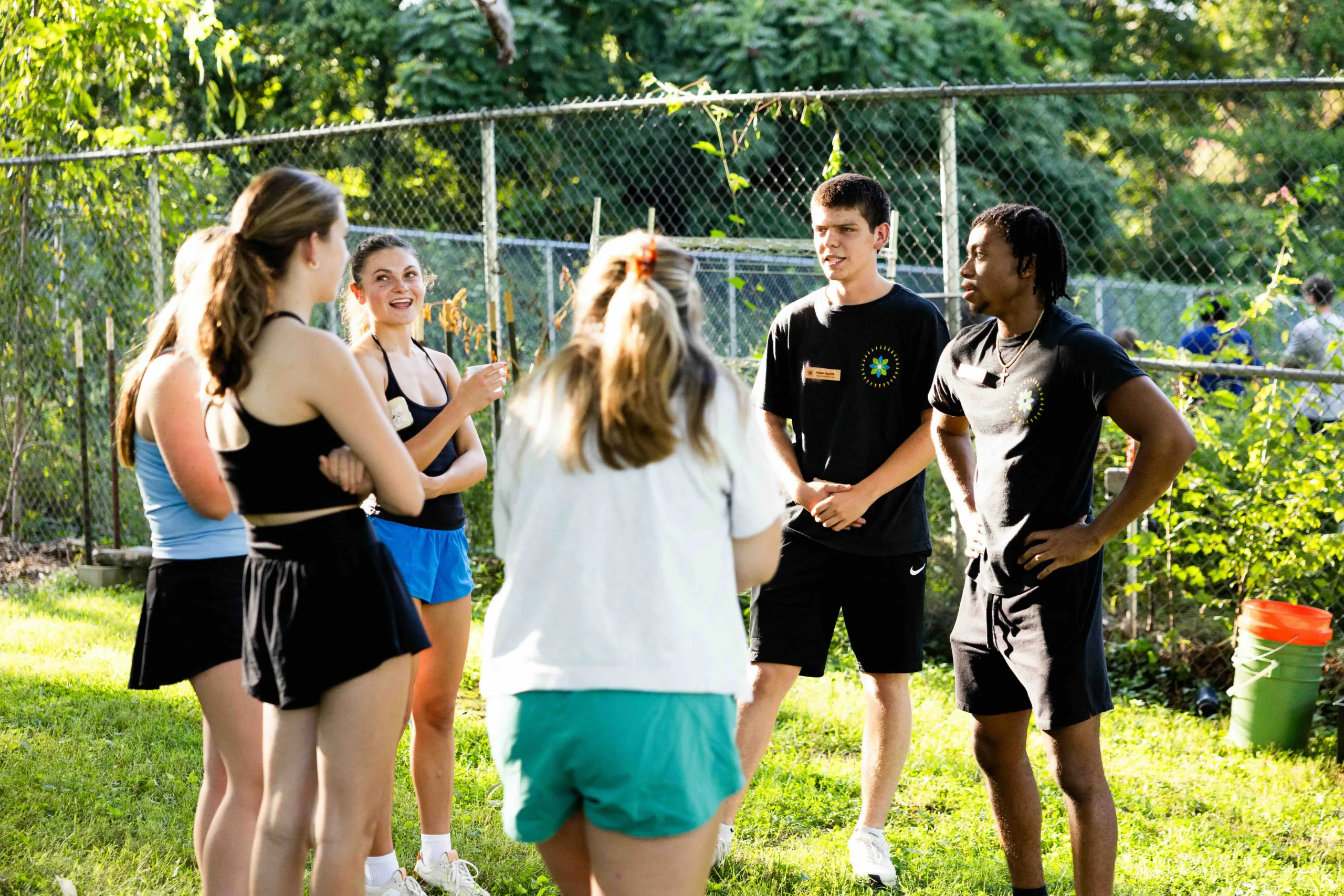
“The start of the semester can be so overwhelming and full of stress,” said Paige Harrell, one of three Campus Garden interns on the team this fall. “Taking a couple of hours to be outside, appreciate the beauty all around you, eat good food, meet new faces, and learn a little about something you may have never engaged with before is special.”
At Dig In, interns led tours of the regenerative agriculture demonstration space and introduced its resident chickens. Students harvested garden-grown produce, including apples, okra, and tomatoes, and cut flowers to take home.
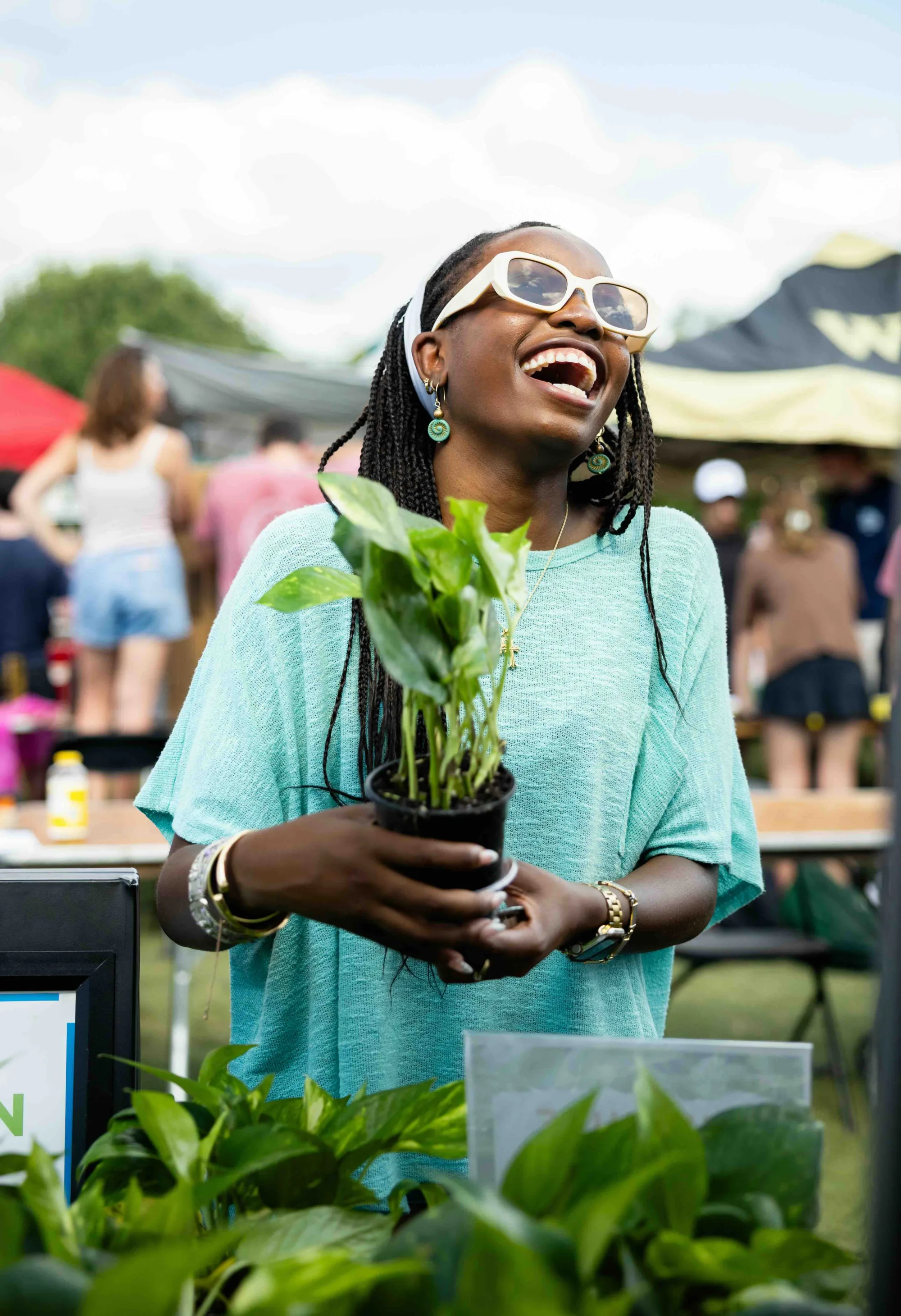
The momentum continued at the student involvement fair the following week, where Office of Sustainability interns distributed pothos plants and reminders to “nurture your plant, nurture yourself” to over 400 interested students. Interns shared how to get involved, including through the Sustainability Leadership Group (SLG), Sustainability Ambassadors, and Campus Garden volunteer hours.
Let’s Taco-Bout Sustainability
The Office of Sustainability’s culminating orientation event, Let’s Taco-Bout Sustainability, took place the next day, capping two weeks of events and opportunities for new students. Interns and peers from campus organizations led breakout sessions for students who came to learn more about specific topics.
In one session, Owen Sawyer, the Office of Sustainability’s sustainability career network intern, shared career development skills and ways to connect with Wake Forest alumni leading in their respective fields. In another, Outdoor Pursuits shared upcoming trips in the area, while our dining operations and engagement interns shared how students can eat for both their and the planet’s well-being through plant-forward dining. After filling their minds, students then filled their plates with tasty plant-based tacos catered by Harvest Table.
Finding Community, Empowering Leadership
By the start of September, every first-year student from the class of 2030 had engaged with sustainability in at least one context. Over 40 students joined Sustainability Ambassadors and a new SLG cohort of 15 first-years joined the ranks of the Office of Sustainability’s peer leaders, priming them for leadership development in their time at Wake Forest and beyond.
“My goal is to meet students where they are, but never leave them where they start,” said Cohen. “I want to introduce them to the wide lens of sustainability, not just on campus, but in career paths, and help them understand how in a connected world, this lens can apply to anything they’re doing.”
