
By Reese Lile (‘28), Sustainability Staff Writer
Dr. Jill Crainshaw, Vice Dean for Faculty Development and Academic Initiatives and professor of worship and liturgical theology in the Wake Forest School of Divinity, is also an alumna of the Magnolias Curriculum Project and 2018 Champions of Change awardee for her use of place-based explorations to enhance learning. She is an ordained Minister of Word and Sacrament in the Presbyterian Church, and the author of several leadership and liturgical books. She brings explorations of sexuality, gender, inequality, and environmental justice into her work with theology. Dr. Crainshaw serves as the University’s Ombuds and previously served the school as Acting Dean and Interim Dean.
In 2018, Dr. Jill Crainshaw was awarded an Academics & Engagement Champions of Change award for her course titled “Sacraments and Ordinances: History, Theology and Practice.” The course focused on baptism and the concept of bread in The Lord’s Supper, using these traditional Christian teachings in combination with modern technology and nature to show the connection between sustainable resource production and faith practices.

To do so, she took a place-based educational approach. In one class session, her students went to the local wastewater treatment plant to see where water is cleaned before it’s returned to the environment in Forsyth County.
“I encouraged them to invite people in their faith communities to think about this water, because a lot of people are baptized inside the church building, and so they might not make that connection,” she said.
“We here in Forsyth County have a very plentiful supply of water, but there are many places that don’t. And baptism takes on different nuances in that way.”
The same can be said of food used during worship services, which Dr. Crainshaw expanded on in her course.
“I wanted them to think about what it takes to make bread; all the parts of bread, how many different farmers and how much is involved in putting together a loaf of bread that you might use in communion,” she said. “I remember helping them think about how, if you don’t bake the bread used in worship, you go to the grocery store and buy bread, all the different workers that had to be involved for you to have that one loaf of bread – the farmers, the people who made the bread and whatever facility it was made in, the people who packaged it, the people at the checkout counter that saw to it that you could get it in your cart and bring it to church – and how much money did they make? Did they make a living wage? Because in some way, when you eat that bread, all of those communities are with you.”
Dr. Crainshaw’s background as a pastor of Neriah church, a small place of worship in the mountains of Virginia, shaped the way that she approaches teaching. She recalled how impactful the ritual of baptism was for her. The church was quite old and there was no official structure for baptisms. So, when people wanted to join the church community, they would go down to the river.
“We would stand amid the trees with the water rushing around us,” she said.
The river held memories, she said, which made her think about the greater context of the water in which she was standing.
“I can recall a time where canoeers and people fishing in a boat came past us while people and we, the church members, were standing on the bank singing,” she said. “We were all outdoors, really imagining the power of water. That same river in Rockbridge County, back in the 60s, flooded and a lot of people were killed.”
She became interested in the elements of worship, the bread, the grape juice or wine – the sacraments that came from the earth itself – and helping fellow ministers become attuned to their origin.
“Those kinds of things come from actual elements of the earth that have a lot of power, both to keep us alive, but also to disrupt in ways that we can’t control,” she said. “So I think that’s where it started for me, wanting to do that kind of teaching. From the outset, it was kind of connected to that environmental, sustainable way of thinking about worship.”
Dr. Crainshaw has carried this with her into her courses, including “Sacraments and Ordinances: History, Theology and Practice,” and a food and faith course taught with her colleague Mark Jensen, a fellow Champion of Change awardee for his work on faith, health, and ecological wellbeing in 2019.
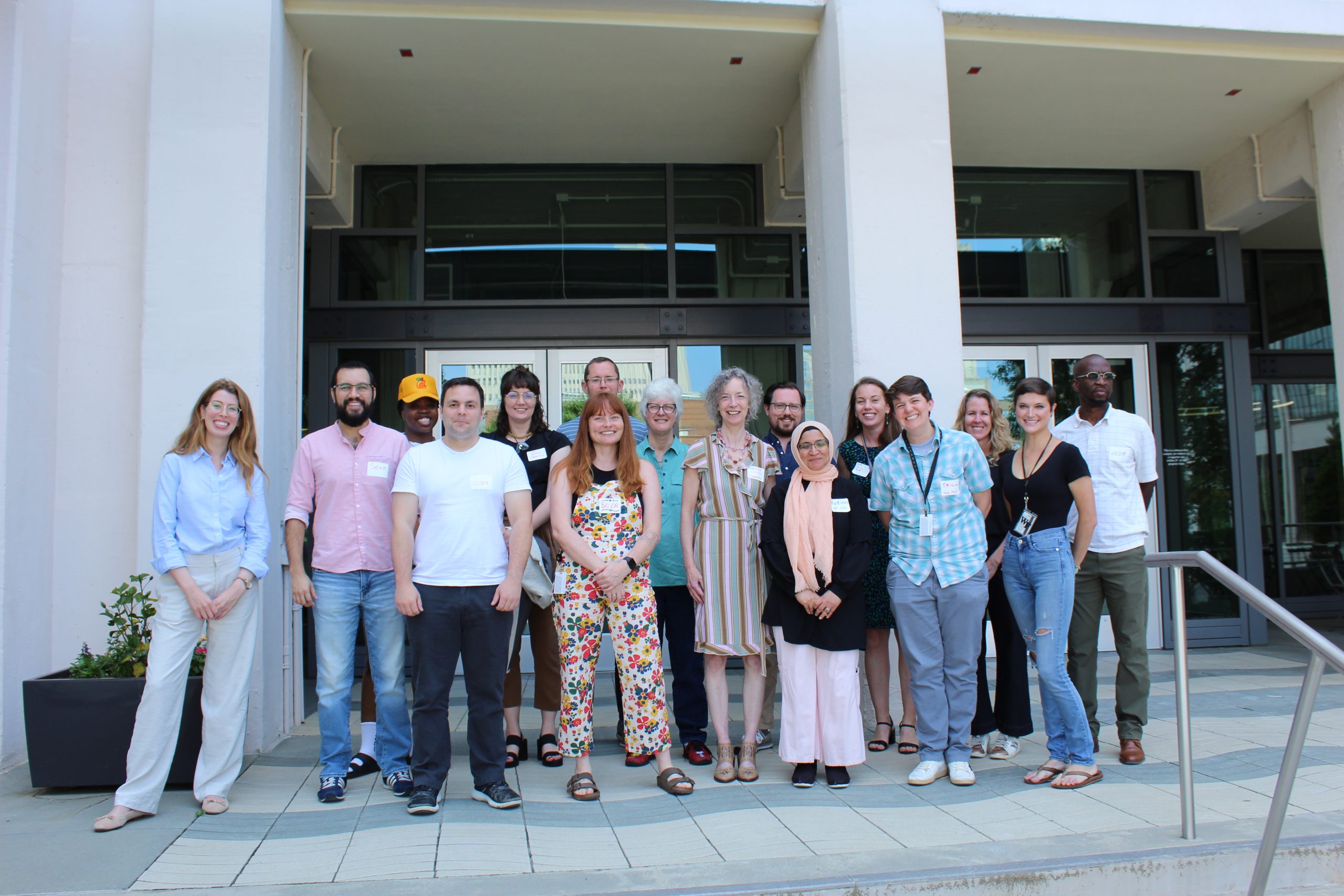
She’s also carried her expertise into her role co-facilitating the Magnolias Curriculum Project for the past two years. A 2015 participant of the two-day sustainability-across-the-curriculum workshop herself, Dr. Crainshaw now gets to help fellow faculty across all disciplines enhance their teaching and engagement with sustainability issues.
“We’ve had people from all over participate in the [Magnolias] Project, from Computer Science, the Humanities, the English department,” she said. “It’s interesting that they all find ways that this relates to the world of sustainability or ecology or environmental challenges.”
This May, Dr. Crainshaw will lend her skills and knowledge to a new group of faculty seeking to incorporate sustainability topics into their teaching as a co-facilitator for the third year in a row, alongside Dr. Erin Henslee, Associate Professor in the Department of Engineering.
“There’s a growing community and network of people that are committed to this work. And if you want resources, or you want to do some interdisciplinary effort like that in your class or in your research, we have people that are open to doing that,” she said. “I want to say a word of gratitude to all the people who have done so much work over the years that the Office of Sustainability has been in existence, and then spreading the word and extending the network. It is important work and it really impacts people, because it definitely has shaped the way I teach.”
2026 Magnolias Curriculum Project Applications are now open! Learn more.